What Africa Sounds Like When the World Goes Quiet
Most of us don't realize how loud our lives are until the noise stops.
Not the obvious stuff — traffic, construction, the neighbor's leaf blower. We tune that out. It's the constant low-grade hum of civilization that follows us everywhere: the refrigerator's drone, the HVAC cycling on and off, the phantom buzz of a phone that isn't even buzzing. We're so saturated in man-made sound that most Americans have genuinely forgotten what quiet feels like.
Then you land in the African bush, and the whole thing resets.
The Moment It Hits You
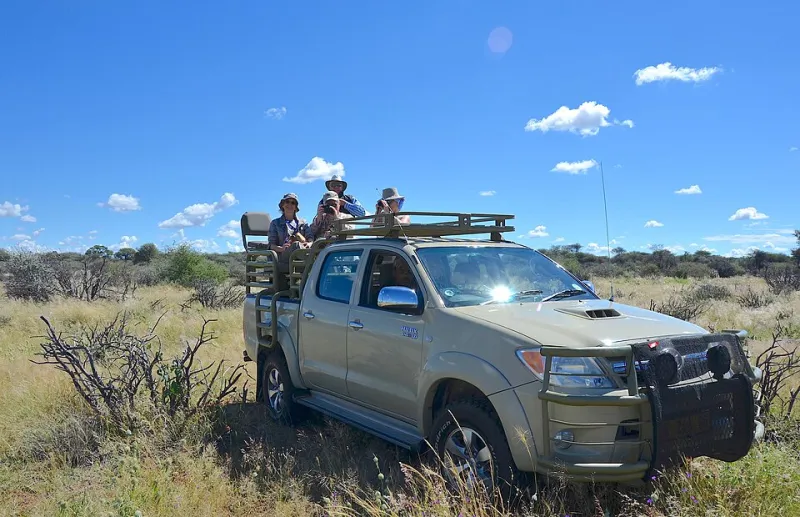
Ask anyone who's done a proper safari — not the resort-adjacent kind where you can hear the pool bar from your tent — and they'll tell you about the moment. It usually happens on the first full morning, somewhere between the pre-dawn wake-up call and the first game drive. You step outside, coffee in hand, and there's this pause where your brain is still bracing for the world to be loud.
And then it just... isn't.
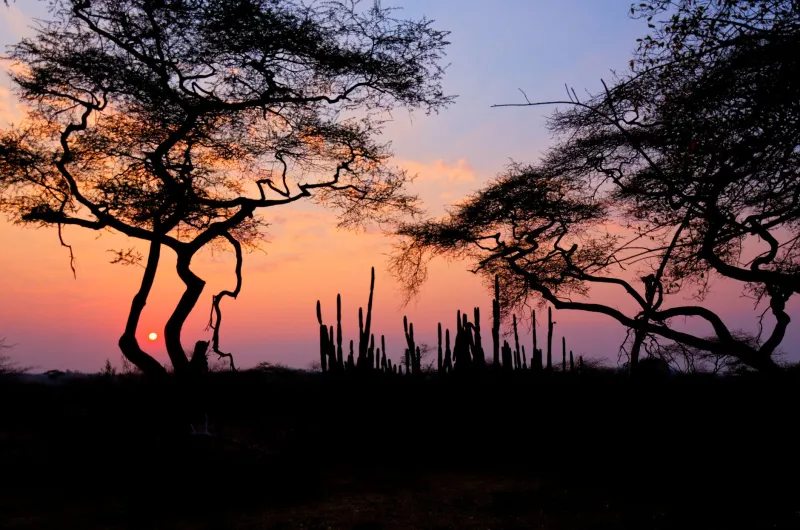
What fills that space instead is something that takes a few minutes to actually hear. A hornbill calling from a marula tree. The dry grass shifting in the wind. Somewhere far off, a hippo exhaling in a river you can't see. It's not silence in the anechoic chamber sense — it's something richer than that. It's sound that exists on its own terms, with no human agenda behind it.
Vera Okafor, a guide with more than fifteen years leading clients through the Okavango Delta and the Serengeti, has watched this moment happen hundreds of times. "People almost always go still," she says. "They stop moving, stop talking. Something in them recognizes it before their brain does. They're hearing something real for the first time in a long time."
What's Actually Happening in Your Brain
This isn't just poetic. There's hard science behind why the acoustic environment of the African bush hits differently.
Research in the field of psychoacoustics — the study of how sound affects human perception and psychology — has consistently shown that natural soundscapes reduce cortisol levels, lower heart rate, and activate the parasympathetic nervous system, which is the branch responsible for rest and recovery. A 2021 study published in Proceedings of the National Academy of Sciences found that spending time in environments with high natural soundscape diversity produced measurable improvements in health outcomes, mood, and cognitive function.
But what separates the African bush from, say, a forest hike in Vermont isn't just the absence of human noise — it's the density and complexity of the natural sound environment. The Serengeti, the Kruger, the Maasai Mara — these ecosystems contain layered acoustic niches that have evolved over millions of years. Different species call at different frequencies, different times of day, in response to different triggers. The result is a soundscape of almost architectural complexity.
Dr. Marcus Webb, a neurologist based in Chicago who has studied sensory recovery in high-stress populations, puts it plainly: "White noise machines and meditation apps work by masking stimulus. The natural environment works differently — it engages the auditory cortex without triggering threat responses. Your brain isn't ignoring sound; it's processing sound that tells it everything is okay. That's a fundamentally different neurological state."
The Dawn Chorus Is Not Optional
If there's one acoustic experience that safari veterans unanimously insist on, it's the dawn chorus.
In the African bush, sunrise isn't quiet. It's a full-scale acoustic event — hundreds of bird species activating simultaneously, the air temperature changing in ways that carry sound differently, animals shifting from nocturnal to diurnal rhythms. The effect is overwhelming in the best possible way. Guides often describe watching guests stand completely motionless through the whole thing, which can last forty-five minutes to an hour.
"Americans especially," says Okafor with a smile, "they come in wanting to photograph everything, document everything. By day two, some of them are just sitting there in the morning with their hands in their laps. They've figured out that this isn't something you capture. You just have to be in it."
There's something almost confrontational about that realization for people who've spent their lives optimizing every experience. The dawn chorus doesn't care about your content strategy. You can't replay it or improve it with a filter. You can only show up and let it happen to you.
Why Your Sleep App Can't Compete
The sleep technology market in the US is worth billions of dollars, built almost entirely on the premise that we need help recovering from the noise of modern life. And it works — to a point. But travelers who've spent even a few nights in the bush describe a quality of sleep that no app, supplement, or blackout curtain has ever matched.
Part of this is the darkness, part of it is the physical exertion of game drives. But guides and returning travelers consistently point to the sound environment as the missing variable.
"At home, I use a fan, a white noise machine, and earplugs," admits David Carrillo, a software engineer from Austin who did his first safari in Zambia two years ago. "In the bush, I slept with the tent mesh open and fell asleep to hyenas and frogs and I don't even know what else. Best sleep of my life. I came home and threw out the white noise machine."
What David experienced wasn't just relaxation — it was something closer to sensory recalibration. After days of hearing only sounds with biological meaning, his nervous system had essentially learned to stand down. The constant low-level threat assessment that urban soundscapes trigger — is that a siren? a car alarm? someone at my door? — had nothing to feed on. So it stopped.
How to Actually Hear Your Safari
Most first-time safari guests spend a significant portion of their trip in a kind of acoustic fog — still decompressing from the flight, the time zone shift, the novelty overload. Here's how to move through that faster and actually tune in.
Ditch the earbuds early. Even on the long transfer drives between camps, resist the podcast. The sounds of the landscape in transit are part of the experience.
Ask your guide to stop the vehicle and cut the engine. Not just for sightings — for listening. The difference between hearing the bush through a running Land Cruiser and hearing it in total silence is significant.
Wake up before the dawn chorus. Your guide will make this easy. Don't waste it by lingering in the tent.
Sit with discomfort at first. For many people, genuine quiet initially feels unsettling. That's the withdrawal. Sit through it.
Leave the structured meditation for home. In the bush, the environment does the work. Your only job is to stop overriding it.
The Thing You Didn't Know You Were Missing
There's a reason people come back from safari changed in ways they struggle to articulate. They'll talk about the animals, the landscapes, the guides. But often what's shifted most fundamentally is something quieter than any of that.
They heard the world without a human layer on top of it. And some part of them remembered that this is what existence is supposed to sound like.
You can't bottle it. You can't download it. But you can book a flight and go find it.
The bush is waiting. And it's not making any noise about it.